La guerre des tuques d’la semaine passée
A fan trailer, made entirely with AI, for fun and to see where AI video tools stand today. Here is how I made it, step by step.
The trailer (56 seconds)
The story
Winter 1984. While digging the emergency tunnel under the snow fort, Ti-Loup breaks through the floor… and the whole gang comes back out of the same tunnel, at the same spot, one week earlier. Face to face with themselves. Every trip adds another Ti-Loup: Frank sees an army, Josée sees a problem, and the time travel starts to erase them.
A homage
I watched La guerre des tuques (1984) dozens of times as a kid. The original film was directed by André Melançon, written with Danyèle Patenaude and Roger Cantin, and produced by Rock Demers (Productions La Fête), the first of the Contes pour tous. This trailer is a non-commercial fan homage, with no connection to the creators or rights holders of the original film.
The models used
Claude (Anthropic)
Story, scripts, prompts, editing · orchestrates the whole production
GPT Image (OpenAI)
Characters, sets, storyboard · via the fal.ai and Higgsfield APIs
Seedance 2.5 (ByteDance)
Video and the kids’ voices · via Higgsfield
Eleven v3 (ElevenLabs)
Trailer narrator · a deep Quebec voice
Eleven Music (ElevenLabs)
Original epic score · composed section by section
Step by step
- 1
The idea and the script
One sentence to start: what if the tunnel under the fort sent you back one week? With Claude, I wrote a short series bible (characters, rules of the time loop, 1984 look) and a minute-by-minute trailer script: every shot, every line, in Quebec French.
- 2
Character sheets
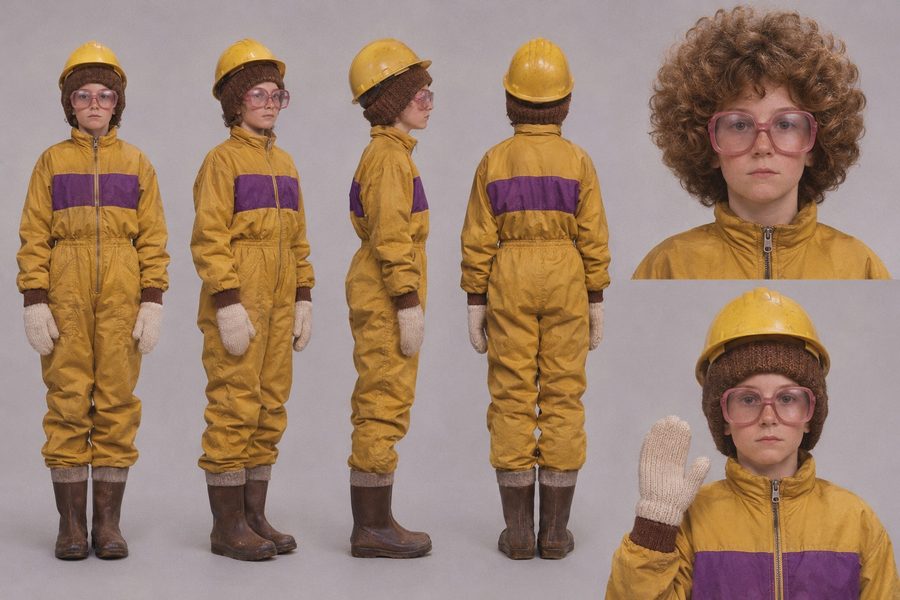
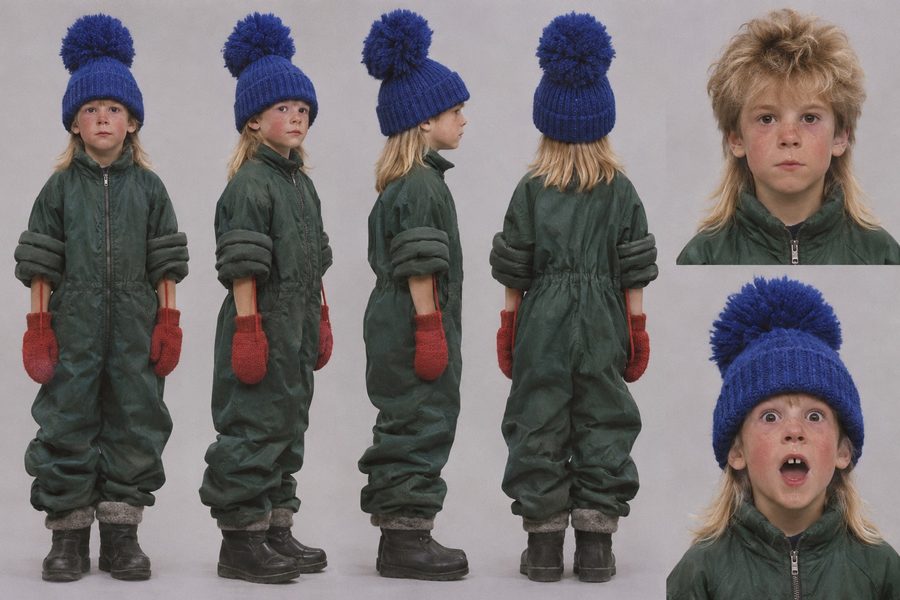
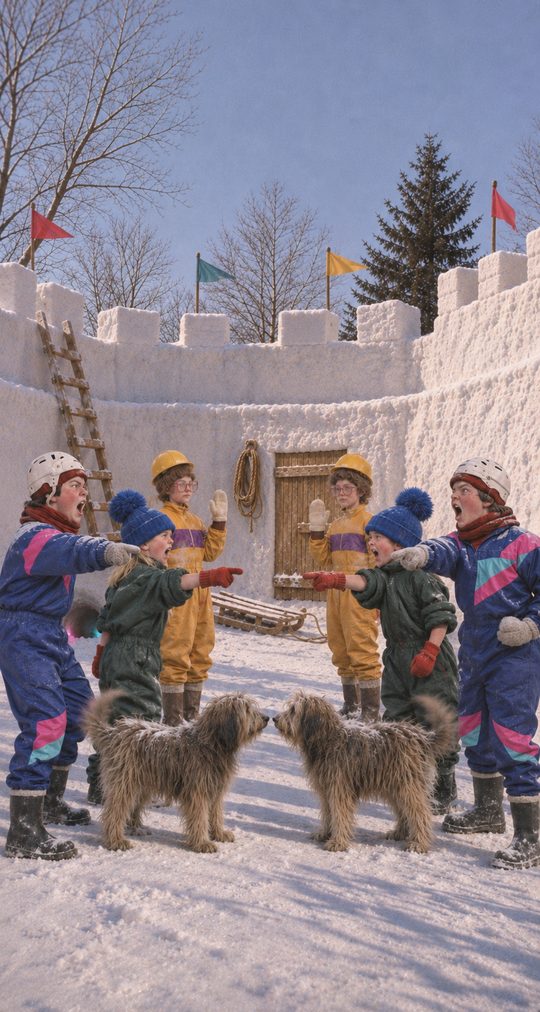
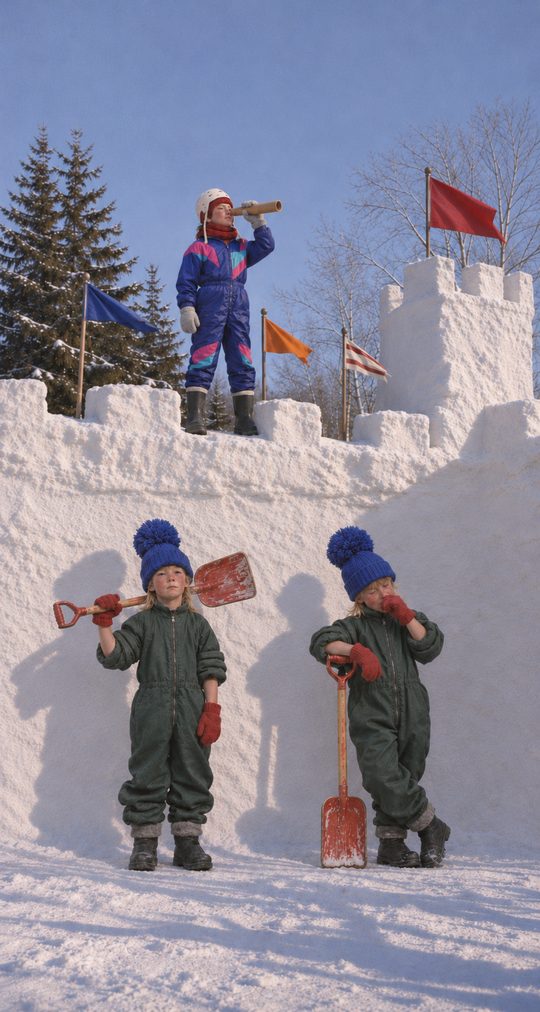
Before any video, each character gets a reference sheet: four full-body views plus close-ups. Frank with his hockey helmet over his tuque, Josée with her yellow hard hat and giant pink glasses, Ti-Loup and his mullet, Marco, and Barbotte the dog. These sheets are what keeps faces and outfits consistent from shot to shot.
- 3
A 22-shot storyboard
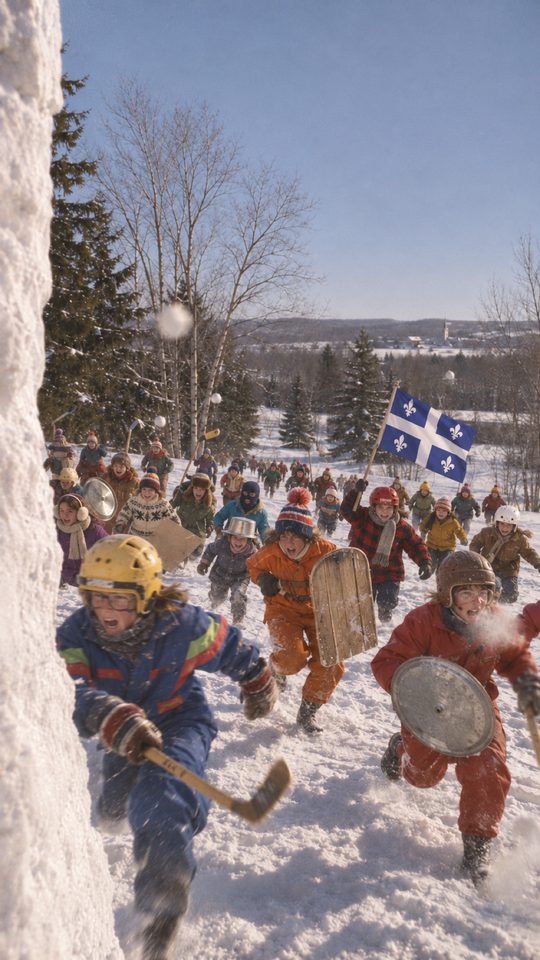
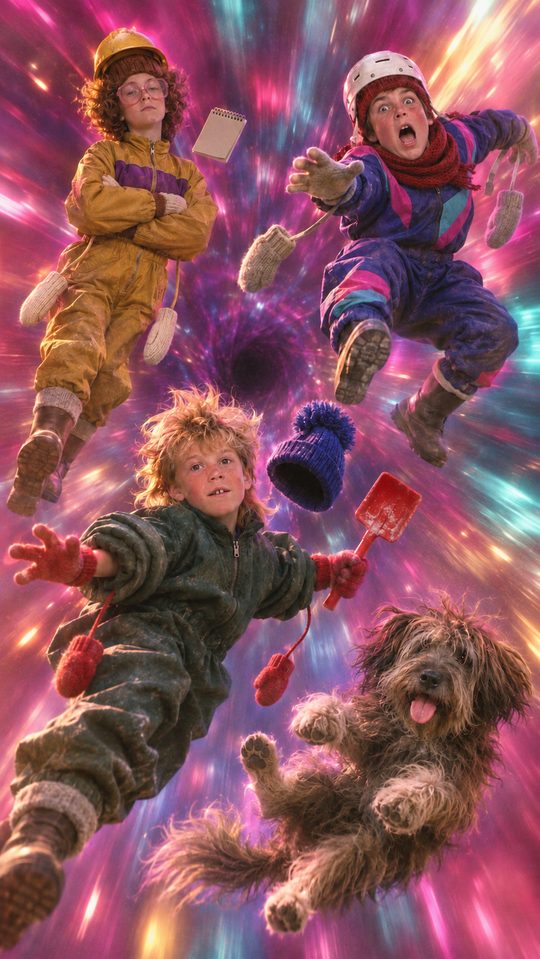
Then one still image per shot, in trailer order, plus the sets (the field, the inside of the fort, the tunnel) and the props. Every image was approved, rejected or commented on in a small review page I built, before a single video credit was spent. Then an animatic: the stills edited to time with the lines, to lock the rhythm.
- 4
The video
Each shot is generated by Seedance 2.5 from its approved storyboard image, with the character sheets as references and the lines written in the prompt. Everything was first generated as cheap 480p drafts, 4 to 12 seconds each, then reviewed and re-generated shot by shot.
- 5
Voices, narrator and music
The kids’ voices come straight from Seedance, generated with the picture. To keep each kid’s voice the same across shots, I cut a short clip of each voice from the approved drafts and fed it back as a reference. The trailer narrator is an ElevenLabs voice, and the epic score was composed with Eleven Music, then re-cut on the shot changes.
- 6
Title and edit
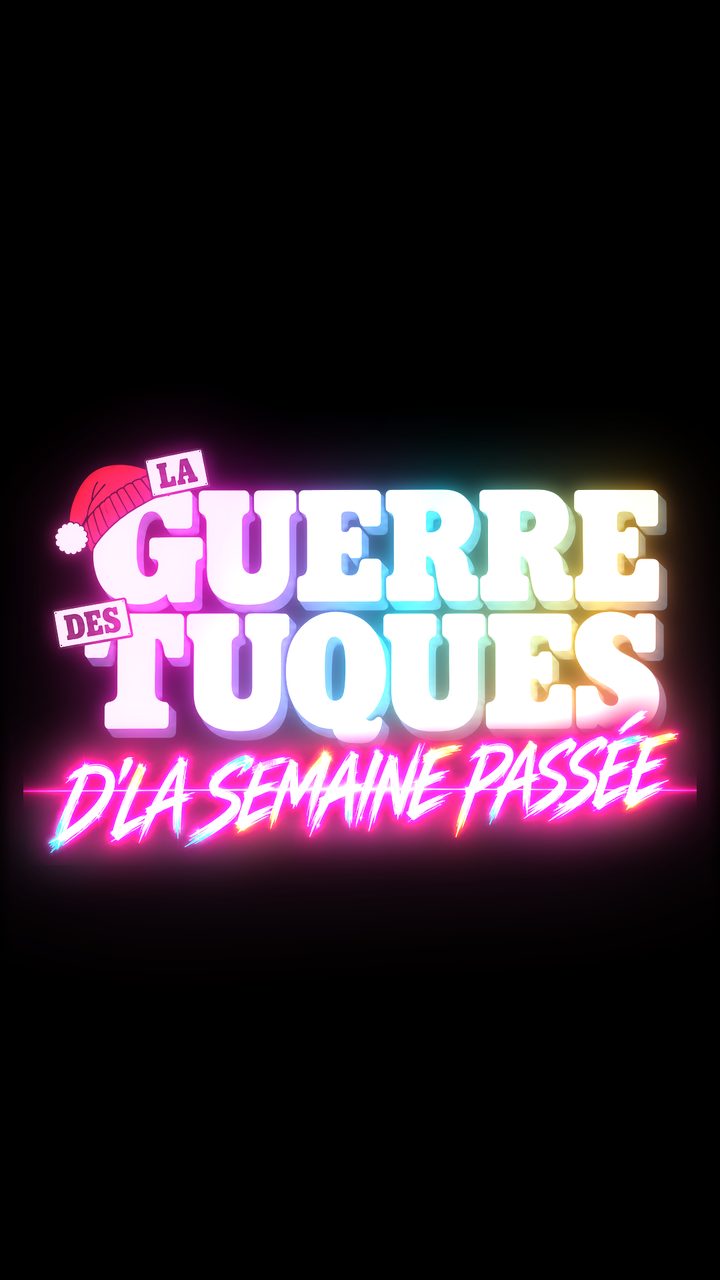
The neon title is animated in code: the plain title appears, « d’la semaine passée » flickers on like a faulty neon tube, then the whole logo lights up. The edit itself is a script: every shot’s in and out points, the narrator cues and the music sections, rebuilt in a minute after each note, with an automatic check for stray frames between shots.
What I learned
Storyboard before video, always. Approving every image before spending video credits saved dozens of retakes.
Video models move poorly when they have to guess. Describing the motion second by second changed everything.
Making kids’ voices by speeding up adult voices gives a helium effect. Voices generated with the picture were far better.
There are still limits: the model would not make a child character’s hand disappear, whatever the prompt. Probably for the best.
In numbers
56 s
of trailer
22
storyboard shots
≈ 30
video generations
5
AI models
Want more of these? Tell me which Conte pour tous I should revisit next.